Blog

  • What the Old Man Whispered to the Biker Made the Whole Diner Cry

    What the Old Man Whispered to the Biker Made the Whole Diner Cry

    A biker snatched an old man’s cane in front of the whole diner and mocked him for it. He didn’t realize one phone call would bring four government SUVs to the door, or that the patch on his collar was about to expose a secret he’d carried his whole life.
    👇 READ MORE 👇


    FULL STORY:

    The old man always sat in Booth Seven.

    Same diner. Same black coffee. Same quiet stare out the rain-streaked window of Marty’s Corner Diner, a place off Route 9 that smelled like fried onions and burnt toast and had not changed its menu since 1987.

    Nobody knew much about him. The waitresses called him Mr. Hale. White hair, a neatly trimmed beard, and a worn wooden cane propped against the vinyl seat beside him. He was the kind of man who never raised his voice, yet somehow made everyone around him speak softer.

    Every Tuesday. Exactly noon. Always alone.

    Dolores, who had waited tables at Marty’s for twenty-two years, would set down his coffee without being asked. “Same as always, Mr. Hale?”

    “Same as always, Dolores. Thank you.”

    That was about the extent of it. In eleven years, she had never gotten more than a sentence out of him. But she had noticed things. He never touched his coffee until it had gone lukewarm. He never looked at his phone. And every Tuesday, around twelve-thirty, he’d take a small, folded photograph out of his jacket, look at it for a long moment, and tuck it away again.

    She never asked. Some things you don’t ask.

    This Tuesday, the rain was coming down hard, and the sky over the parking lot had gone the color of wet slate. Dolores was refilling the ketchup bottles when she felt it before she heard it, a low rumble in the floor, rattling the silverware in the trays.

    Six motorcycles roared into the lot like thunder.

    The diner doors swung open, and the cold air came in with them. Heavy boots. Leather vests. Loud laughter. They were the kind of men who enjoyed being feared and had built a whole personality around it. Three families in the corner booths suddenly found their pancakes very interesting. A teenager at the counter slid his phone into his pocket and stared at his plate.

    The leader was a broad-shouldered man in his early forties, with a shaved head and a tattoo of a flaming wheel crawling up his neck. His name was Rex. His vest said so, stitched in red thread above the pocket. He dropped into a stool at the counter like he owned it, snapped his fingers at Dolores, and said, “Coffee. And make it hot, sweetheart.”

    “Coming right up,” Dolores said, and she kept her voice steady, the way you do when you’ve served a thousand rude men and learned that steady is the only thing that works.

    Rex scanned the room the way a man shops for trouble. His eyes passed over the families. Over the teenager. Then they landed on Booth Seven.

    Something about the old man’s calm dignity irritated him. It was the way he sat, spine straight, hands folded, looking at the rain as if the six motorcycles outside were no more interesting than the weather. In Rex’s world, everyone looked up when he walked in. This man hadn’t.

    He smirked. He stood, hitched up his belt, and walked straight over, his boots thudding on the linoleum. His crew followed, grinning, already enjoying what they assumed was coming.

    “Well, look at this,” Rex said.

    His palm slapped the table. The coffee cup jumped.

    “A king without a kingdom.”

    The old man never looked up.

    The bikers laughed. Rex leaned in closer, close enough that the old man could have smelled the cigarettes on his jacket.

    “Can’t hear me, Grandpa?”

    Nothing.

    The silence only fueled him. A man like Rex can’t stand being ignored. It makes him feel small, and he has spent his whole life making sure he never feels small.

    Then he grabbed the cane.

    One hard yank.

    The table jerked. Hot coffee splashed across the surface. A glass slid off the edge and shattered on the floor, and the sound cracked through the diner like a gunshot.

    For half a second, nobody moved. Then one of the bikers howled with laughter, and the whole crew joined in. Rex spun the cane through the air like a baton and held it up like a trophy.

    “Careful, boys,” he shouted. “This might be the only thing keeping him alive!”

    More laughter. Somebody pulled out a phone. Then another. Red recording lights blinked across the room. Rex noticed and played to them, strutting down the aisle, swinging the cane, bowing to his own audience.

    “Ladies and gentlemen, the great and powerful Mr. Nobody!”

    Dolores stood frozen behind the counter, her hand pressed against her mouth. She wanted to say something. She wanted to call somebody. But her feet wouldn’t move, and she hated herself for it.

    The old man hadn’t moved either.

    He didn’t beg. He didn’t threaten. He didn’t even ask for the cane back.

    Instead, he watched.

    He watched the coffee drip off the edge of the table. He watched the broken glass scatter across the floor, each shard catching the gray light from the window. He watched Rex turn, laughing, tossing the cane to one of his friends.

    And then, as Rex turned, his leather collar flipped open, and the old man’s eyes slowly settled on something that had been hidden underneath.

    A patch. Small. Faded. Stitched in silver thread, worn thin by decades of weather and wear.

    A hawk, wings spread wide.

    The moment he saw it, everything changed.

    Not anger. Not fear. Recognition.

    His hand, steady as stone, moved into his jacket. Slowly. The bikers watched, still smirking, waiting for a pill bottle or a wallet or some pathetic old-man thing.

    He pulled out a small black key fob.

    The bikers burst out laughing.

    “What is that?” Rex grinned, wiping his eye. “Calling life support?”

    The old man pressed a button.

    A quiet click.

    Then he raised it to his ear.

    “It’s me.”

    The diner began to fall silent. It wasn’t the words. It was the voice. The old man’s voice had changed. It was no longer soft. It was the voice of a man who had once given orders that moved armies.

    A pause. Someone, somewhere, was talking.

    Then three words.

    “Bring him here.”

    He ended the call and set the fob on the table, next to the spilled coffee.

    Rex laughed again, but it came out thin. Nobody else was laughing.

    Because outside, tires screamed.

    Everyone turned toward the window. Through the rain, a black SUV swung into the lot, fishtailing slightly on the wet asphalt. Then another. Then another. Then another.

    Four armored vehicles slid into place, boxing in the motorcycles one by one. The windows were tinted black. The license plates were government plates. The engines idled low and heavy, like animals waiting.

    The diner went completely silent. Even the grill seemed to stop sizzling.

    Doors opened. Men in dark suits stepped out into the rain, and not one of them reached up to cover his head. They weren’t security guards. They weren’t police. They were something much higher, and every person in that diner understood it without being told.

    Their eyes scanned the room once, quickly, professionally.

    Then every single one of them moved directly toward Booth Seven.

    The bells over the door jingled as they entered, a sweet, ridiculous sound against the weight of the moment. Rex’s grin vanished. His friend, the one holding the cane, took a half step backward and bumped into a table.

    The old man slowly stood.

    Without his cane. Without help. His back unfolded like a drawn blade, and suddenly he was taller than anyone in the room had realized. Straight as a soldier. Straight as he must have been fifty years ago.

    The first man in the suits, gray at the temples, built like a fireplug, stopped three feet from the booth. His face went pale. His mouth opened, but no words came out.

    Then, in front of the entire diner, he saluted.

    Every man behind him did the same. Eight hands snapped to eight foreheads in perfect unison. The sound of it, fabric and leather and discipline, was somehow louder than any of the laughter had been.

    Dolores let out a breath she hadn’t known she was holding.

    The room froze. The families. The teenager. The cooks, who had come out from the kitchen wiping their hands on their aprons. All of them stared at the quiet old man they had ignored for eleven years.

    The old man returned the salute with a small nod. “At ease.”

    Then he finally turned and looked at Rex.

    Then at the silver hawk patch on his collar.

    His voice, when it came, was calm. Deadly calm.

    “Where did you get that patch?”

    Rex swallowed. His throat clicked audibly. The swagger had drained out of him so completely that he looked like a different man, a boy caught in a lie.

    “It was my father’s,” he said.

    The old man’s eyes narrowed.

    “No.”

    A longer pause. The rain drummed against the windows.

    “It belonged to my son.”

    The biker’s face drained of color.

    The old man took one slow step forward.

    “You see…”

    His gaze never left Rex.

    “I designed that patch.”

    Another step.

    “I pinned it onto every member of the unit myself.”

    Another.

    “And only one man ever wore that exact silver hawk, with the crooked left wing. My boy sewed it on himself the night before he shipped out. He was a lousy tailor. He was a wonderful son.”

    The diner was so quiet that nobody dared breathe.

    Rex’s lips parted, but nothing came out. His hand drifted up to his collar, to the patch he had worn for twenty years without ever asking where it came from. His mother had given it to him when he was fifteen. Your father’s, she’d said, and then she’d never said another word about the man.

    The old man stopped directly in front of him, close enough that Rex could see the wet shine in his eyes.

    Then he spoke the words that shattered the room.

    “Because forty years ago…”

    His eyes hardened, and his voice cracked, just barely, on the last syllable.

    “…I buried my son wearing it.”

    No one moved. Somewhere in the back, a fork slipped from someone’s fingers and rang against a plate.

    Rex’s knees seemed to give a little. The man who had been laughing five minutes earlier now stood with his mouth open and his hands hanging empty at his sides.

    “My name,” the old man said quietly, “is General Thomas Hale. Retired. And the boy you’ve been wearing on your collar for twenty years was my only child, Daniel.”

    He reached out, slowly, and gently touched the edge of the patch with one weathered finger.

    “He had a son. I never knew. His mother moved away before I could find her, and I spent four decades looking for a ghost.” His voice dropped to almost a whisper. “I was told, three years ago, that a young man in this county rode with a silver hawk. I’ve sat in this booth every Tuesday since, hoping to see it walk through that door.”

    He looked up into Rex’s face.

    “You have your father’s eyes.”

    The cane fell from the other biker’s hand and clattered across the floor. Nobody picked it up.

    Rex’s chin trembled. For a moment, the tattooed, shaved, hard-eyed man looked twelve years old. Then the tears came, and he didn’t try to stop them.

    “I didn’t know,” he said, and his voice broke in half. “I swear to God, sir. I didn’t know.”

    “I know you didn’t, son.”

    The general took a breath. Then he did something nobody expected. He bent down, slowly, with a small grunt of effort, and picked up the cane from the floor. He looked at it for a moment, turned it over in his hand, and then he held it out.

    Not to the suited men. To Rex.

    “I won’t be needing this anymore,” he said. “But I’d like you to have it. It was your grandmother’s father’s. It’s been in our family a long time.”

    Rex stared at it, and then at the old man. His hand shook as he took it.

    “I’m sorry,” he whispered. “For all of it.”

    “Then make it count.” The general laid a hand on his shoulder, steady and warm. “Come sit with me. I have forty years of stories about your father, and I’d like to start with the one where he fell off a horse at his own graduation.”

    A sound escaped Rex, half laugh, half sob.

    Behind them, the suited men quietly stepped back to give them room. The bikers slipped their phones away, one by one, ashamed. The teenager at the counter wiped his eyes with his sleeve. Dolores walked over with a fresh pot of coffee, her hands trembling, and set two clean cups on the table.

    “On the house,” she said softly.

    The general looked up at her and smiled, the first real smile anyone in the diner had ever seen from him.

    “Thank you, Dolores. Same as always.”

    And in Booth Seven, where a lonely old man had sat every Tuesday for eleven years, two people finally sat down together, a grandfather and a grandson meeting for the first time. Outside, the rain finally began to ease, and a thin line of sunlight broke through the clouds, falling across the table where, between two cups of black coffee, lay a faded silver hawk with one crooked wing.

  • Tell Elliot I’m Here. And Don’t Wrinkle My Coat

    Tell Elliot I’m Here. And Don’t Wrinkle My Coat

    My husband’s mistress handed me her fur coat and ordered me to “hang it carefully,” thinking I was the housekeeper… But she had no idea whose name was on the deed to the house she was standing in. 👇 READ MORE 👇


    FULL STORY:

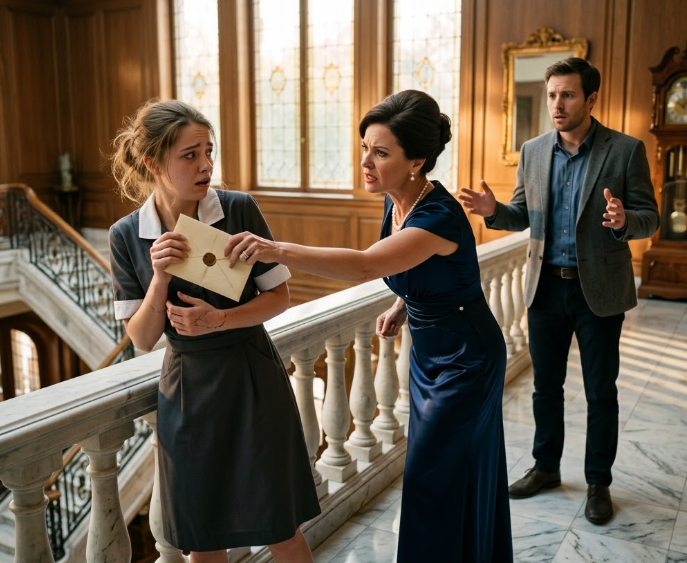
    She didn’t knock. She didn’t ring the bell. She punched in the master security code, and the lock gave that soft, obedient chime that told me exactly how long this had been going on.

    I stood in the doorway of the kitchen with a cold cup of coffee in my hand, my hair twisted up in a claw clip, wearing a gray sweatshirt with a tiny hole near the cuff. On the island behind me lay the quarterly growth reports for Halcyon Systems, the software company I had built from a rented desk and a secondhand laptop, long before I ever became Mrs. Elliot Grayson.

    The woman who walked into my foyer was maybe thirty-two. Blonde, sleek, and polished to a shine, she wore a camel-colored coat with a fur collar and carried herself like a person who had never once been told no. She glanced at the double-height ceiling, the curved oak staircase, and the chandelier I had spent four months tracking down in a little workshop outside Lyon. Then she looked at me.

    Her eyes went to my face, bare of makeup. To my hair. To the sweatshirt. I watched her do the math in real time, and I watched her get the answer completely wrong.

    “Oh, good, you’re here,” she said, already shrugging out of the coat. She held it out to me without so much as a glance at my eyes. “Tell Elliot I’m here. And hang that carefully. It costs more than your monthly pay.”

    I took the coat.

    Not because I was obedient. Not because I was stunned. I took it because thirty years of building things had taught me a simple rule: arrogant people talk far too much when they believe you’re harmless.

    “Of course,” I said, in the quietest voice I owned. “Can I get you anything while you wait?”

    She actually smiled. “Sparkling water. Lemon, not lime. And tell him I don’t have all afternoon.”

    “Right away.”

    I carried the coat down the hall like a waiter carrying a tray. It smelled like expensive perfume, and underneath it, faintly, like the cologne I had bought my husband for his last birthday. That was the moment the last little knot of doubt in my chest came undone. I had suspected for eight months. I had hired a forensic accountant for six weeks. I had a folder. But until that second, some small, foolish part of me had wanted to be wrong.

    I wasn’t.

    I hung the coat in the mudroom closet, on a wooden hanger, very carefully. Then I picked up my phone, pressed one button, and said three words to the man on the other end.

    “Come in now.”

    Then I walked to the built-in cabinet in the study, opened the second drawer, and lifted out the blue leather folder.


    Let me tell you about that house.

    It sits at the end of a long private drive in Westport, Connecticut, behind a line of old oaks that are older than my country’s interstate system. People slow down on the main road just to look at the stone facade. What they don’t know is that I bought the land at thirty-one, when the property was a crumbling wreck with a flooded basement and a real estate agent who kept apologizing.

    I spent five years rebuilding it. I fired three architects who confused their egos with expertise. I argued with contractors, chased down delayed shipments from Italy and Portugal, and picked the finish on every cabinet by hand. I signed every check. I knew what every square foot of marble had cost, down to the dollar.

    And when I married Elliot Grayson, six years after that, I did something my mother had drilled into me since I was a little girl.

    I kept my name on the deed.

    “Love is not a legal document, Claire,” she used to say, folding laundry at our kitchen table in Ohio. “So don’t let anybody confuse the two.”

    Elliot had laughed when my attorney explained the arrangement. The estate would be held by the Whitmore Family Trust, and I was its sole trustee. He’d smiled that easy, boyish smile and said, “Babe, I don’t care whose name is on it. Everything I have is yours anyway.”

    At the time, I believed him. I remember thinking how lucky I was.


    I found the first crack on a Tuesday in February. A charge on a corporate card, a boutique hotel in Newport, on a night Elliot had told me he was in a “strategy retreat” in Boston. Elliot was the VP of Business Development at Halcyon. I had hired him myself, because he was charming, and because charm closes deals. I trusted him with a corporate card the way you trust someone you love.

    One charge became six. Six became forty. Consulting invoices for a company called Sutton Strategic Partners, paid out of a discretionary budget he controlled. Deliverables: none. Meetings: none. Employees: one.

    Her name was Brielle Sutton.

    By April, my forensic accountant had laid out a timeline for me on a conference table. Two hundred and eleven thousand dollars of company money, funneled through a shell consultancy, spent on hotels, jewelry, a Manhattan apartment lease, and a weekend in the Amalfi Coast that Elliot had described to me as “a client dinner in Philly.”

    I remember staring at that spreadsheet and feeling something odd. Not rage. Rage is hot, and this was cold and clean, like a window opening in winter.

    “Do you want to confront him?” my attorney, Dana Reyes, asked me.

    “No,” I said. “I want to finish.”

    And so I did. I waited. I collected. I let Elliot keep smiling at me across the dinner table, and I let him kiss my forehead before he left for work, and I sealed every piece of evidence in one blue leather folder like a woman preparing a surgery.


    The front door opened again, twelve minutes after the coat went into the closet.

    I heard Elliot’s voice before I saw him. “Brie? What are you doing here? I told you I’d meet you at—”

    “Surprise,” she said, laughing softly. “I couldn’t wait. Your wife’s out, right? The help said she’s away.”

    There was a pause.

    “The help?” Elliot said.

    I walked out of the study with the folder in my hands. I did not hurry. I let my slippers make no sound on the marble.

    “Hello, Elliot,” I said.

    I have never seen a man’s face drain of color that fast. It was like watching someone pull a plug. His mouth opened and then closed. His keys slid out of his hand and hit the floor with a bright little clatter.

    Brielle looked from him to me, and back again. The smile on her face didn’t vanish all at once. It curdled, slowly, one muscle at a time.

    “Claire,” Elliot managed. “I thought you were at the… you said you had a…”

    “I said I had a board dinner in Hartford,” I said. “That was a lie. I’m sorry. I’ve been telling a few of those lately, and I’m not very good at it. You, on the other hand, have been remarkable.”

    “Wait.” Brielle’s voice had climbed half an octave. “Wait, you’re… she’s…” She turned to Elliot. “She’s the housekeeper. You said the housekeeper would be…”

    “I never said that,” he whispered.

    “You said there was staff!”

    “There is staff,” I said gently. “Marta comes on Tuesdays and Thursdays. She’s wonderful. She’s also been here fourteen years, which is longer than you’ve known my husband.” I tilted my head. “Sparkling water, lemon, no lime. Did I get that right? I’m afraid I got distracted.”

    Brielle’s cheeks went a blotchy red. “This is… this is ridiculous. I didn’t know. He told me you were separated.”

    “Did he?” I looked at Elliot. “That’s interesting. We renewed our anniversary reservations in March. You gave me a bracelet.”

    Elliot said nothing. His mouth worked on the air like a fish on a dock.

    “Please,” I said, and gestured toward the living room. “Let’s sit down. This will take about twenty minutes, and I promise it will be the most honest conversation this house has ever heard.”


    They sat on the cream sofa I’d chosen because it was stubborn about stains. I took the armchair across from them, and I set the folder on the coffee table between us, the blue leather catching the afternoon light through the tall windows.

    “I’ll start with the easy part,” I said. “The house.”

    Elliot let out a shaky breath. “Claire, we can talk about this like adults.”

    “We are. That’s why I’ll be brief.” I slid a single page from the folder. “This is the deed. Recorded in the Town of Westport, Connecticut. The property is owned by the Whitmore Family Trust. I’m the sole trustee and sole beneficiary. You are not on it. You have never been on it. You are, legally speaking, a guest.”

    Brielle’s eyes traveled around the room, as though she was seeing the walls for the first time. The chandelier. The custom shelving. The fireplace mantel I’d salvaged from a 1890s mansion in Newport. I watched it dawn on her that the woman she’d ordered to hang her coat had not only hung it in her own closet, but had also paid for the closet.

    “Second,” I said, sliding out another page. “The prenuptial agreement you signed, Elliot, with your own attorney present. Section nine. Any breach of fidelity that involves the misuse of marital or corporate funds voids all spousal support and forfeits any claim to non-marital assets. Including, in case it’s unclear, this house.”

    “I never misused—”

    “Third.” I set down a stack of forty-two pages, bound with a black clip. “Two hundred and eleven thousand, four hundred dollars from Halcyon Systems. Paid to Sutton Strategic Partners LLC. A company registered eleven months ago. A company, Ms. Sutton, that has exactly one member, and exactly one bank account, and exactly zero clients.”

    Brielle went perfectly still.

    “Those payments,” I continued, “are not affairs. They’re wire fraud and embezzlement. My board of directors received the same file at nine o’clock this morning. Yesterday, the company’s outside counsel notified the U.S. Attorney’s office. I’m not telling you this to frighten you. I’m telling you so you understand that the next twenty minutes are the last ones in which you’ll have any say in how this ends.”

    “Claire.” Elliot’s voice cracked. “Please. I made a mistake. I was lonely, and you were always working, and I…”

    “I was working,” I said, “to pay for the lights you’re sitting under.”

    He flinched.

    “I’m not going to yell,” I said. “I thought I might. I practiced it in the car. But it turns out that when you finally see the whole truth laid out on a table, there isn’t much left to shout about. It’s just a list of decisions you made.”

    “I’m out of here,” Brielle said abruptly, standing. Her voice shook. “I didn’t know she was your wife, Elliot. You told me that she didn’t care. You told me that she was basically a roommate. I’m not going to be part of this.”

    “You’re already part of it,” I said, not unkindly. “But I’ll tell you something, and you can take it or leave it. I don’t think you’re the villain here. You walked into a house with a man’s keycode and a man’s promises, and you believed him. That’s naïve. It isn’t evil.” I paused. “The invoices, though, those are evil. Or at least, criminal. I’d call an attorney if I were you. Not his. Yours.”

    Her lower lip trembled, and for one second she looked less like a glamorous woman and more like a scared kid in an expensive costume.

    “Your coat is in the mudroom,” I said. “I hung it carefully.”


    Two men in dark suits stood quietly at the end of the driveway, beside a gray sedan. I’d called them before the coat ever reached the hanger. One was Dana Reyes, my attorney. The other was an investigator from the state’s financial crimes unit, a tall, tired-looking man named Agent Holloway, who had been waiting patiently for me to say those three words.

    I walked Brielle to the door myself. I took the camel coat out of the closet, shook it out once, and held it open like a coat check clerk at a very sad party.

    “Here,” I said. “It’s a lovely coat. I didn’t wrinkle it.”

    She stared at me. Then, quietly, she said, “I’m sorry.”

    “I know,” I said.

    She took the coat and walked out into the crisp Connecticut air. I watched her cross the gravel drive, past the oaks and the stone wall, toward the man who was holding his badge low against his jacket so it wouldn’t cause a scene in front of the neighbors. I closed the door before I saw what happened next.

    When I turned around, Elliot was on his knees in the foyer.

    I’d seen my husband in many moods over the years. Confident. Charming. Bored. Impatient. But I had never once seen him afraid, truly afraid, in the way a person is afraid when the floor they’ve been standing on turns out to belong to someone else.

    “Claire,” he said. “Please. I’ll do anything. We can fix it. We can go to counseling. I’ll resign from the company. I’ll pay it all back. Just don’t… don’t do this.”

    “Get up, Elliot,” I said.

    He didn’t.

    “Get up,” I said again, softer. “Please. You’re on a rug I ordered from Istanbul, and you’ll wrinkle it.”

    He laughed, a broken little sound, and then he was crying.

    I let him. I stood there with my arms crossed and let him cry, and I waited to feel triumphant. I waited for the satisfaction, the sweetness of victory that movies promise. Instead, I felt something quieter, and infinitely stronger.

    I felt free.

    “I loved you,” I told him. “That’s the part I want you to understand. It wasn’t a game. I built a life around you. I made room for you, in my house, and in my company, and in my heart. You took the room I gave you and used it to hide.”

    “I’m sorry.”

    “I know. That’s the thing, Elliot. I actually believe you. And it doesn’t change one thing.”

    I opened the front door. The late-afternoon sun poured across the marble, and the air smelled like woodsmoke and cut grass.

    “Dana is going to walk you through the paperwork. The house, the accounts, the company resignation. You’ll have until Monday to remove your personal belongings, and Marta will help you box them. She’ll be kind about it. She’s a better person than either of us.”

    He rose slowly, wiping his face with the back of his hand. Standing in my doorway, in the light I’d chosen for that room, he looked, for the first time in all the years I’d known him, small.

    “Was it always going to end like this?” he asked.

    I thought about it honestly.

    “No,” I said. “It could have ended with a conversation. Any time in the last eight months, you could have told me the truth, and I would have listened. I would have been furious and heartbroken, but I would have listened.” I shrugged. “You just kept choosing the version where I never found out. And in every version like that, Elliot, you were counting on me being smaller than I am.”

    He looked at me for a long moment. Then, without another word, he walked out of the house he’d never owned and into the driveway where his own future was waiting.


    The sedan pulled away a little after five.

    I stood in the doorway until the taillights disappeared behind the oaks. The house was silent again, the deep, expensive, insulated silence of a Saturday in Westport. But it was a different silence now. It wasn’t the silence of a woman waiting. It was the silence of a woman who had finally, completely, come home.

    I went back to the kitchen. My coffee was still on the island, stone cold. I dumped it into the sink and made a fresh pot, and while it brewed, I picked up the quarterly report I’d been reading before the lock chimed.

    Revenue was up nineteen percent.

    Somewhere in the back of the house, the old grandfather clock struck the half hour, and I laughed. Out loud, alone in the kitchen, in my faded sweatshirt and my messy clip, with a hole in my cuff and the whole world still ahead of me.

    People will tell you that power looks like diamonds and designer coats. That it announces itself at the door and demands to be noticed.

    They’re wrong.

    Real power is quiet. Real power hangs up your coat, asks if you’d like a glass of sparkling water, and waits patiently, with a blue leather folder in its hands, for you to finish telling it exactly who you are.

    I poured my coffee, and I sat down at my island in my house, and I went back to work.

    THE END